Category Archives: 3 Intro-s2019

Weaver, Story 5 – Potential Ideas

Idea 1 – Localization on the Presidential Election and relate it to the Student Body government election which just took place at Wake. I would get the student body opinion on why they favored Mellie and what about her political campaign while running vs. other candidates political campaign strategies potentially for the 2020 US Election.

Idea 2 – Potentially, another Spotlight interview on one of the team coaches. Possibly Coach Manning on what the team is going to do next year in terms of getting wins and potentially breaking into March Madness. Though, I’m hesitant because no one like to talk about losses with the ROUGH season that Wake had this year.

Story 4 — The Q&A profile

The Q&A profile:

  1. Alternative form of storytelling.
  2. Readers like them. These are written in chunks, but are connected and revealing.
  3. Give a sense of hearing the subject talk. Capture the personality. Humor, emotion help, if possible.
  4. Create a story with a beginning, middle and end.
  5. You can edit your questions.
  6. You must edit the answers so that they don’t run on too long.
  7. You can shuffle the order of the questions from when you asked them. The idea is to tell a story. You are in charge. Organization — and focus— is essential. Ask yourself: what is this Q&A about? Don’t veer off in several directions. Go deeper and deeper.
  8. The intro – No more than 100 words. This is really your nut graf. You want to introduce not only your subject, but the focus or theme of the story. This is not a biography. It is a snapshot. Keep it relatively focused. Make it sound like a coherent, revealing conversation that tells a story.
  9. Parameters: 800 words, maximum. You need between 8 and 12 questions. Keep answers concise and on point. No wordy questions or answers.
  10. Total word count: 900.
  11. REPORTER INDEX — Don’t forget. You are required to have at least two pre-interviews and additional research. Please give a short description of how your pre-interview subjects were helpful.
  12. REQUIRED: Include a photograph or two embedded in the Word doc.
  13. Deadline: Midnight, Friday.

Two sample Q&As for Story 4

Example 1

Jen Averill: Renowned coach utilizes loss and adversity as a means to grow and learn

Jen Averill is one of the most successful field hockey coaches in America, earning a combined total of eleven national and conference Coach of the Year titles wow! and a combined seven championship trophies (four ACC and three NCAA). Averill’s accomplishments have propelled her to become one of the most winningest coaches of all-time. (field hockey? Or all sports? Be clear)

Despite her myriad accolades, Averill attributes her success to the loses and tragedies, both professional and personal, that she has experienced over the years. She claims that overcoming adversity has had the biggest impact in shaping her coaching philosophy, her purpose, and her desire to continually learn and grow.  Excellent opening.

You’ve been described by your players and colleges as charismatic, boisterous and passionate. Many would be surprised to learn that the Jen they too often hear coaching at Kentner has faced a great deal of tragedy and loss between the passing of your former player and your brother. In what way do you think those losses have shaped you as a person? Great context in setting up your first question.

I think it inspires me to find the positives in life. I think that while others look for escape and thrills, I look to constantly educate myself and grow, as well as develop those around me. I’m always searching for my own why. Why I’m here? Why do I do what I do?  It gives me a sense of purpose and orientates me.

It’s really easy to get caught up in the society’s pressures, the wins the losses, to be critiqued, to be generalized, classified as great because you win. To me, having those losses and seeing life from life has been so helpful in self-examination and making sure I never deter from fundamental values and philosophies.

What are those philosophies and values you mentioned? Great folo

For me, it’s using sport to help develop people. That’s what she does best.  You are a manager of people. Sport is supposed to be about playing and so I’m here wondering how I can teach these guys healthy habits that won’t just happen in four years but will be life-long habits. The best coaches share this philosophy, but it’s a tiny group….

In what ways does your philosophy about life and adversity translate to your coaching style?

I feel that the harder the fall, the greater the gains. If someone’s adversity is the lack of playing minutes in a big game as opposed to someone who blows an ACL or loses a loved one, it pales in comparison. I don’t want to downgrade it because it’s their reality, but I think that… though unfortunate, grief, tragedy and adversity can propel people’s will.  Great candor and empathy in this answer

During the 2017 preseason you enlisted the help of two Marines to take the team through intensive exercises both physically and psychologically. Was this a way of exposing the team to adversity?

It was a threefold process. Number one, I felt this group out of any group I have coached over the past decade needed difficult shared adversity for them to find themselves. I wanted them to lead themselves and not us to lead them. Secondly, we have a communication problem. Whether that’s listening or actually verbalizing the words, what a great application to understand and appreciate the value of communication. And third, our ability to disagree, our ability to have conflict not be viewed with negative connotations but as a way to find a solution. Good insight into an interesting strategy

That was probably the most succinct answer you’ve ever given, well done! GREAT!

Thank you! I can see Jen actually appreciating your compliment, even in a joking manner.

Megan Anderson, the current captain of the team, characterized you as a “weed that grows through the concrete,” inferring that you can thrive in conditions in which others would fail. What are your thoughts on being portrayed as such?

I think that’s awesome, I think it’s completely unique. It strips me down to the rawness of my existence. I feel like I am incredibly blessed, like I was born with some intangibles. I innately believe in people and I truly think I can move them or lead them to places where they may not even believe they can go. I feel like my grittiness has been a byproduct of my environment. I have never accepted no. I am solution orientated, the more you say no, the more I want to prove you that it should be yes. I often wish I could’ve been a player on Jen’s team. This answer explains why…

Why do you feel the need to prove something? Great question

I find it challenging. I try to strip the ego away. I also believe that you have to be careful that you don’t throw your will upon somebody and I never try to do that. I see it as a way in, to open people’s eyes, ears, hearts and ability. If I were to inherit Wake Forest, a successful program that’s made it to the championships, I’m not comfortable there, I want to be the one that builds it, that breaks down those barriers. I love to build, and I love to grow and its hard as hell to bloom every year. nice

So, is that why you seem to take an underdog mentality even though you have been so successful? Great insight in that question…

I think humility is at the foundation and you can always grow and you can always be better. You can be a better teammate you can be a better coach. I’m always growing and the day I don’t, I have to watch out. It’s actually a void I don’t look forward to hitting.

Are you afraid of getting to that point and what does that mean for the future?

Yeah… but I’ll probably get there when I’m around 80.TRUE!  Jeez, what a lonely place to be.

At the same time though I think back to the adversity I’ve faced and just think you’ve got to have fight. You have to have a direction, you have to have your why. Your why has to constantly evolve. It can’t be sedentary or obsolete, or absolute. I’m always figuring out my why. Perfect ending, tying back to an earlier answer.

Example 2

Playing Princess Allows for an Escape

Not many college students can recall at time in high school when they were sitting in their car, dressed as Elsa from Frozen, making the most of the time between stints at children’s parties to get some homework done.

Sophomore Maren Morrisisn’t like most college students. During high school and her freshman year at Wake, she ran two different princess companies, where girls dressed as princesses go to various events. She also dressed as a princess herself.

So tell me a little bit about what you got you involved in “princessing.”

Freshman year of high school, my youth group was planning to go on a mission trip to Costa Rica. We had an auction, and we all had to provide a service to auction off. And some people were doing like lawn-mowing and like babysitting, and my friend and I just got to brainstorming.

And we were like, you know what? What if we offered like a one-off princess appearance for free? Someone will bid on it…

We did it, and after that one party, it just kind of took off.

What was the driving motivation to keep with the business?

I’ve always had a fascination with the face characters at Disney World … And I’ve always loved acting too, so it seemed like a good melding of the two …

Honestly, yeah you get paid, but that was not even the main reason that I wanted to do it. Being able to like see these kids, who were as obsessed with the princesses as I was and still am, just get so hype over it, was an awesome thing. I like how you’re capturing the way she speaks…

But from an acting standpoint, it is so cool to put on this dress and this wig and go perform. And for an hour you’re not yourself, you’re Ariel or Cinderella.

Which is magical. And weird.

It is magical. (And yes, weird, too) Laughter

It sounds like being able to be someone else other than yourself is part of the appeal.

Yeah. I’m always curious to see what it’s like to be someone else and their stories … I think it’s just like an innate curiosity of stories, the world, and of people. That’s the driving force.

I understand you had some health struggles last year. You took medical leave for a semester and stopped “princessing” completely. What was it like to stop doing something that was such a big part of your life?

It was very bittersweet. I had a really bad case of mono over the summer before this year started, and I went on medical leave.

Even though I was on medical leave, I was kind of doing parties on the weekends just as a way to kind of like retain some sort of normalcy. Plus, it was just an escape to get out of my pajamas and put on a corset, and makeup, and a wig. Great details!

I decided in September … with my health, I felt like God was telling me, it’s time to close this chapter. And I was very confused by that, because like you said, it’s such a big part of my life …

I felt like God was telling me, I know you love this, but it’s time for you to pursue other things. It’s just the end of one chapter and the beginning of another.

Have you found any other outlets that allow you the same ability to escape, or be someone else?

So one of the reasons that I felt kind of called away from it is that I have always wanted to act, ever since I was little …

As much as I love the princesses, playing Cinderella isn’t going to help you learn how to create layers of a character if you’re playing a serial killer.

I had to step aside from that structure of playing a princess. So, I’m finding new ways to continue to hone the acting thing and delve into new characters that don’t have the bottom-line princess thing.

I’m doing a lot of short films here on campus. I’m in a web series for Wake TV, which is coming out in a few weeks. And I am, next year, going to try to get into some theater stuff more because I haven’t been feeling well enough to do that this year.

I love to write too, so that’s another outlet.

To come up with a story and all of these different characters, and live through them in different ways – that’s also been another way to manifest it. And I think the writing and the acting go hand in hand with understanding the character, their story, and their backgrounds. This answer loses me. It goes on too long.

Finally, I have to ask, since it seems like you take the time to really think about these characters. Who is your favorite princess?

I didn’t play her much. She doesn’t get much love anymore because she’s old. But Snow White has always been my favorite. Classic choice.

Everyone always gives me crap for it … and I’m, like, hold up. Her stepmother tried to kill her.

But she, through all the adversity, maintained the most positive attitude and retained kindness and didn’t let anything, any of struggles, create any sort of bitterness in her. And I have always admired that positivity. I’ve seen how there are things that she does that I would like to fit into my own life.
 

Story 4, Bolton

I’m interested in doing a profile on a freshman DACA recipient, Rebecca Rodrigues. I think this story would be interesting because she’s shared before that she was born in Rio, but moved to America when she was a baby. She finds it hard to fully be accepted by either culture. I think our nation’s current climate warrants conversations about DACA and how those students feel, as well as how she feels in her identity.

Story 4

At first, I wanted to do me Q&A with Riley Skinner, but he was not available so I am going to do it with John Wofford. He was a former QB at Wake Forest and is now trying to play in the NFL. I will talk to his former coaches and teammates to prepare for my interview with him.

Journal: Work Hard, Play Hard: The Line Between the College Experience and Getting Educated


By: Slater Hale

If you’re a Wake Forest student, chances are you’ve heard the phrase “Work Forest,” but is this fair?

Many students felt like they often had more work than their friends at other schools.

“Compared to other schools of the same stature, we have a really heavy workload.” said Junior Zoe Lamason.


This sentiment seemed to be shared by many students around campus,, that the workload in particular was worse at Wake Forest.

“Overall it’s a lot of work” and that friends at other schools say they  “have a lot less work,” said Junior Feng Mian Lee.

However, not all students felt the pressure of “Work Forest.”

“This is a really easy school, let me tell you I do no work and I have a 3.7” said Sophomore Olivia Woods. 

“It seems like a work hard play hard school… the academics are pretty rigorous, there are a lot of students here who feel like they have to do a lot of things on their own,” said Kristian Robinson, a faculty member in the counseling center. “A lot of students do really well in high school and that translates differently in college… some of the people here aren’t used to being average or below average.”

Ultimately, Wake Forest students seem to be working hard, but faculty and students recognize that students are also having a good time while being here.


Gazette; Wake Forest Reacts to Op. Varsity Blues

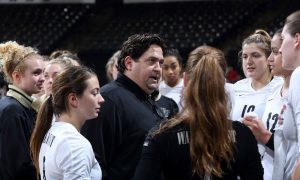
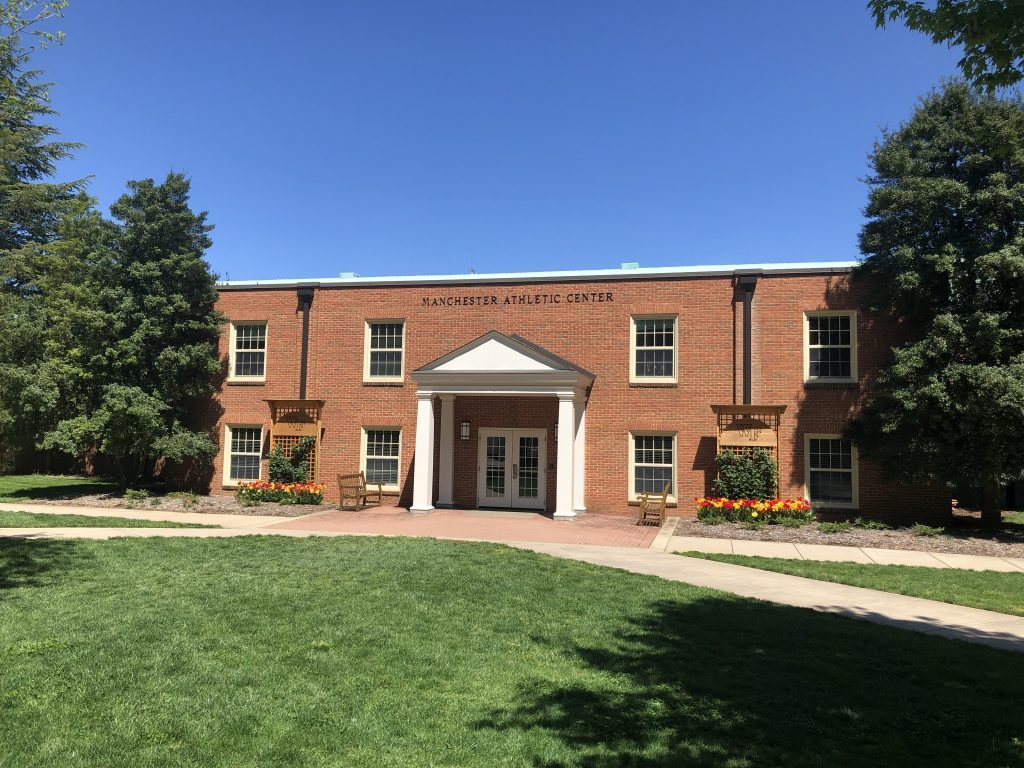
Manchester Athletic Center: Home of the Wake Forest Volleyball Team

By Benny Bagnell

When news broke a few weeks ago that a current Wake Forest University student got into the school through illicit means, many community members expressed surprise and outrage. As more details have come out, students have shown increased empathy for the student involved.

Wake Forest’s very own William Ferguson, a once highly-regarded women’s volleyball coach, was accused of accepting a bribe of $100,000 and funnelling that money into the Wake Forest Deacon Club, the Wake Forest Women’s Volleyball team, and the rest to a private volleyball camp he controlled. The money was taken from a charity account and sent to Ferguson by William Rick Singer, the mastermind behind the entire Operation Varsity Blues.

Operation Varsity Blues included many prestigious universities such as Yale, Georgetown, and USC. The scandal came to the forefront of national news on account of the involvement of notable celebrities such as Lori Loughlin, an actor from the nostalgia-inducing Full House.

Students have had a mixed bag of reactions when asked about the university’s involvement in the nationwide college admissions scandal. Some were nonchalant, while others expressed utter befuddlement.

“I was very surprised at first because of the standards that Wake Forest upholds,” said M.C. Meredith, a junior and member of the Women’s Tennis team. “The school talks a lot about the integrity of the admissions process, so this took me by surprise.”

“I feel like this is a pretty isolated scandal,” said sophomore McCarthey Lupo. “This seems like more of a volleyball or athletic department-specific problem, and not a campus-wide issue.”

So what should become of the student who gained admission into Wake Forest on account of her parent’s wealth? Most students agree that the parents and Ferguson are more culpable.

“Even if she did know, she shouldn’t be punished for one mistake,” said Meredith.

“Does she work hard?” asked Haley Porter, freshman. “If she does, then yes, she should definitely be allowed to stay.”

While the fate of the student has yet to be resolved, most students agree that the school’s admissions practices require increased scrutiny, particularly within the athletic department.

“The process [to get into the school] should be more difficult for athletes,” said Meredith. “Something needs to change.”

Link

The Post: At ‘Work Forest,’ is drinking the common response to stress?

By Chad Schouweiler 

Journalist Chad Schouweiler learns more about the correlation between stress and drinking at Wake Forest.

With finals only a month away and the ‘Work Forest’ moniker as salient as ever, students share how they are coping with the stress.

“I think alcohol can definitely accelerate the stress relief process,” said sophomore Charles Donaldson.

While Donaldson admits that adequate rest and spending time with friends are his primary tactics for coping with stress, he also highlights the common-place behavior on Wake’s campus of using alcohol as a distraction from stressors.

The National Institute on Alcohol Abuse and Alcoholism reported in 2015 that roughly 60% of college-age students drank alcohol in the past month.

Wake Forest publishes several key stress coping tactics on its Thrive website: “Set goals and priorities, find your Zen, and get enough rest.” However, and to no surprise, alcohol use is not among those advised tactics.

The correlation between stress and drinking is not just limited to coping mechanisms.

Some students claim that being immersed in the fast-paced, results-based environment of Wake Forest ultimately promotes a drinking culture.

“Working hard serves as a justification for letting yourself go on the weekends,” said senior Christopher Ley. “Drinking is not necessarily just stress relief…but you feel like you deserve it.”

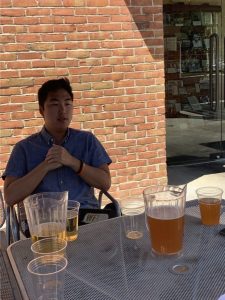
Senior Chris Ley sharing his thoughts outside of Shorty’s.

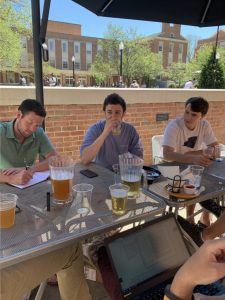
Seeing multiple tables covered in empty Coors Lite pitchers packed full of students at 2 p.m. seems to support Ley’s point.

Although, this should not overshadow the students at Wake that adhere to more traditional coping mechanisms. Sophomore McCarthy Lupo says that her main coping tactic is to meet with her professors the week before finals.

“I do think that the idea of ‘Work Forest’ and the drinking that students do to deal with that probably adds to the university’s image of having a drinking culture,” said Lupo.

The Herald; Blended Beef Burger Raises Questions in Student Body

Image result for veggie burger

By: Griffen Dresner

At the center of Wake Forest’s campus lies the Pit; a lively buzzing dining hall where Demon Deacons hunt for their meals each and every day.

While most students may not know it, the Pit has changed its infamous hamburger recipe to a new “Blended Beef Burger”, gradually implementing it over the past few months. The new burger has a 30% mushrooms and soy base, leaving 70% of it untouched.

Sophomore Christian Desminome, who eats “.75 burgers per week,” said he did not notice the sign that indicates that the recipe changed.

The Office of Sustainability has been making a move towards an all-campus plant-based dietary effort. The new Blended Beef Burger is the first attempt made to target the fast food sector; one that often is based on livestock ingredients.

This grand shift in a core component to most student’s diet has happened without their full understanding. Most students are completely unaware of the drastic ingredient change within their burgers.  

Freshmen Shi Williams interviewed by Dresner

Video taken by Christian Odjakjian

Hunter, a Freshman student who declined to give his last name, was asked what percent of the new hamburger now consists of Mushrooms. “I think almost 100%,” Hunter said.

Although sustainability efforts have helped to drastically reverse Wake Forest’s carbon footprint. Many students are dissatisfied with the dietary changes.

Freshman Sam Moore gave the most telling response of what a consistent burger eater thinks of the new recipe.

“I eat about two burgers a week here,” Moore says. “I know there was some change with the hamburgers because now they suck,” Moore said.


Relevant Articles:

https://www.nbcnews.com/better/lifestyle/burger-king-has-meatless-impossible-whopper-it-healthier-original-ncna991536

https://www.nytimes.com/2019/04/01/technology/burger-king-impossible-whopper.html

https://www.vox.com/future-perfect/2019/4/1/18290762/burger-king-impossible-whopper-plant-based-meat


Story 4 – Idea

I wanted to interview Wake Forest University’s President, Dr. Nathan O. Hatch. The focus would be on the Dr. Hatch that we don’t see, about his college experience and what inspired him to be a university president.