The Post: At ‘Work Forest,’ is drinking the common response to stress?
By Chad Schouweiler
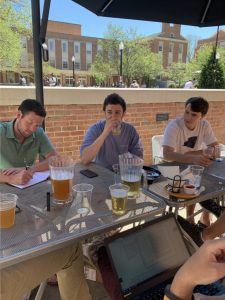
Journalist Chad Schouweiler learns more about the correlation between stress and drinking at Wake Forest.
With finals only a month away and the ‘Work Forest’ moniker as salient as ever, students share how they are coping with the stress.
“I think alcohol can definitely accelerate the stress relief process,” said sophomore Charles Donaldson.
While Donaldson admits that adequate rest and spending time with friends are his primary tactics for coping with stress, he also highlights the common-place behavior on Wake’s campus of using alcohol as a distraction from stressors.
The National Institute on Alcohol Abuse and Alcoholism reported in 2015 that roughly 60% of college-age students drank alcohol in the past month.
Wake Forest publishes several key stress coping tactics on its Thrive website: “Set goals and priorities, find your Zen, and get enough rest.” However, and to no surprise, alcohol use is not among those advised tactics.
The correlation between stress and drinking is not just limited to coping mechanisms.
Some students claim that being immersed in the fast-paced, results-based environment of Wake Forest ultimately promotes a drinking culture.
“Working hard serves as a justification for letting yourself go on the weekends,” said senior Christopher Ley. “Drinking is not necessarily just stress relief…but you feel like you deserve it.”
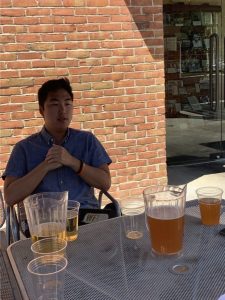
Senior Chris Ley sharing his thoughts outside of Shorty’s.
Seeing multiple tables covered in empty Coors Lite pitchers packed full of students at 2 p.m. seems to support Ley’s point.
Although, this should not overshadow the students at Wake that adhere to more traditional coping mechanisms. Sophomore McCarthy Lupo says that her main coping tactic is to meet with her professors the week before finals.
“I do think that the idea of ‘Work Forest’ and the drinking that students do to deal with that probably adds to the university’s image of having a drinking culture,” said Lupo.