Category Archives: Intro-f2019

Introduction to Journalism

Sample Q&A profiles/stories

Sample 1

Adjusting to Campus Life After Spending First Year Abroad

The college transition is both highly anticipated and feared by freshmen. However, their hopes and fears are soon eased as they meet other freshmen in the same position.

Sophomore Anna Jones is experiencing this rollercoaster of emotions all over again. Participating in the Global AWAKEnings program, Jones spent her freshman year studying abroad in Copenhagen, Denmark.

Acting as a guinea pig for this new program and having never traveled to Europe, Jones did not know what to expect, but was excited for the adventure.

Living on campus the first time this year, she is gradually finding her niche at college. Good opening

 To begin, how did you become interested in spending your first year abroad?

Oh, man! That’s so hard. I like to say I’m adventurous. I like trying new things. I’m outgoing, but only once you first get to know me. It takes me awhile to warm up to people. This is a good answer, but it doesn’t exactly answer your question.

Most people here visit the school and fall in love with it. But, not many people decide to spend a whole year away from the school they love. What inspired you to go abroad? Good; you are revising your first question and giving her another chance to answer

My dad went to Wake and actually works here now, and my two oldest brothers went to Wake. I always said I wasn’t going to go here because I wanted to go away for school, but then I took an official tour and was like, “I love it so much that I have to go here.” So, this program was the perfect chance for me to be adventurous and have a unique first-year experience and still come home and be at Wake. Now she’s answered your first question, too.

Can you describe the group’s dynamic abroad? good

We started with 18 students, but one didn’t come back second semester and then another transferred after the program. We’re like a family, but if you take any group of teenagers and put them together for a year, it can get pretty tense.

How so? good

We would wake up in the same apartment, commute to class together, be in class together and travel together, so it was a lot of time spent together. I don’t even think I could be with my family for that long (laughs). nice

I heard you are on the pre-med track. How did the courses offered fulfill your requirements?

Most classes were divisionals, but I actually got very little divisional credit. Since a Danish professor taught our art class we didn’t get divisional credit even though we had a study tour to Venice, and I got to see the actual paintings we studied. But, that made the class worth it. It was literally History of Western Art, which you can take at Wake, but if I want the credit I have to take it again. Ok,, that’s crazy. They volunteered to take this first year abroad [driven in part by a lack of housing on campus] and they don’t get WF credit for all the courses they take there?

 Did you ever get homesick? Good question

It came in waves. When I came back second semester, I missed my family a lot more because the adrenaline from first semester wasn’t there. Also, second semester the sun would rise at 10 a.m. and set at 3 p.m., which didn’t help. But, by the end of second semester, I didn’t want to leave again. Interesting.

Did you ever second-guess your decision? good

Personally, a lot of second-guessing happened this semester because we really are like freshmen. We’re thrown on halls with upperclassmen, and it’s hard as sophomores to make friends. But, it’s getting easier.

What was your favorite memory of the year?

Oh, man (laughs). I don’t know why, but this one always stands out. A few of us went to Edinburgh, Scotland, and we went pub-hopping. We went into this one pub where a bunch of locals were having a trivia night. They let us join in, so we played trivia in this bar with a bunch of locals. I think about it all the time.

 How has your experience shaped you as a person?

I seek out diversity more than I did before. My friends from high school and I were all similar, which was awesome, but I now want to meet people different from me who have different life stories. Great answer

What has it been like adjusting to Wake this year?

In my head I was like, “Oh, I’m going to get back and all of a sudden I’m going to have a great group of friends.” But, I have to go through the period of that awkward freshman year again where I’m trying to find people who I get along with. I feel like a first semester freshman, honestly. Interesting and insightful.

How do you think your life would be different if you did not pursue this program?

I think I’d be a lot more comfortable here. If I’m walking by myself I have this weird habit where I have to call someone and talk to them to distract myself. So I don’t have to make eye contact with people. I still feel like a stranger on campus. But, I still wouldn’t trade this experience abroad for the world. What a curious impact…

Thinking back, what is one word you would use to describe your overall experience?

I don’t have one word, but I have a phrase: Once in a lifetime. There is never going to be another time in my life when I get to be in Europe for a year as a teenager (her future profession may require that…). First of all, I will never have the money to do that again (laughs). Second of all, there’s never going to be a period in my life when I’m just traveling. For me, that’s the kicker. I doubt this is the answer you were looking for.

Making predictions about the future at age 19 is dicey. But it’s the answer she offered. So, your choice, if you recognize the weakness in the answer, is to 1) leave it, as you did, 2) end with the question above, which would work pretty well, or 3) like you did at the outset, rephrase your question for perhaps an answer that better captures the experience of starting college a long way from campus.

Reporting Index:

Anna Jones, sophomore, Mocksville, N.C.

Rachel Cooper, sophomore, Atlanta, Ga.

Caroline Bryant, sophomore, Washington, DC

Sample 2

Inspiration Comes in Many Shapes and Sizes

 Laya Mohan has done substantially more work than most to get where she is today: A Wake Forest graduate student pursuing her master’s degree in Health Communication.

This is because Mohan was born with only one full arm, the other being nonexistent from the elbow down. This birth defect, known as Amelia, is marked by the absence of one or more limbs or arms.

Although one may not be able to imagine not being able to fully utilize an arm, Mohan has dealt with this and continues to deal with this each day, inspiring  those around her. – good, clear opening

 What was it like as a kid to have a physical disability? Good place to start

 Because of the confidence my parents taught me, I was able to go to school and do everything normal kids would. All kids are curious. When you are in first grade, you just want an answer, and I didn’t mind giving them an answer.

Was there anything you felt you could not do that kids normally take part in? good folo

 I did everything I wanted to: ballet, jazz, tap. I also played soccer for some time. I didn’t feel like there was a limitation because I would try it and if I couldn’t do it, then I just couldn’t do it.

 Can you explain how you have adapted to life? You paint your nails, cook, and perform several other tasks better with one arm than people can with two? How? Nice context and implicit message that you notice those things.

 I just find my own way to do things. It’s just a little bit of adaptation. I do my nails all the time. Maybe I can’t stand up and paint my nails, but I can be sitting down and doing it. Cooking sometimes takes me a little longer to do, but that’s okay because what matters is that the dish tastes good. It’s about figuring out the best way for me to do something. I just go into it and figure it out. If it doesn’t work for me, it doesn’t work. If it does, great. It doesn’t get me down. As long as I tried, I feel better about it. You asked a specific question, and she offered a general answer. Ideally, you follow with – can you give me an example in regards to cooking? And go with the more detailed response

 Were you nervous when you came to Wake Forest as a freshman?

 No. At Wake, I know everyone here is really educated, so they probably have either met someone or know of these things beforehand. Some people like to ask me straight up, which is fine. It’s up to you. If you want to know, you can ask. If you don’t want to know, don’t ask. I don’t know what other people are thinking. Most of the time, what I’ve heard people say is, “I don’t even notice at first.” interesting

 What is the biggest obstacle you have overcome?

 The prejudices people have against you without knowing who you are. But people who have those prejudices against you don’t matter because they aren’t taking the time to get to know you. This reveals a good bit about her character

 I know there was a time when you felt self-conscious about putting yourself out there online. Can you tell me more about this experience?

 Yeah, sure. My friend was encouraging me to get on Hinge (a dating site) and I just had in the back of my mind: “What if they’re like ‘Oh, wait. No, because she only has one arm?”’ I don’t want to deal with that. I like meeting people in person because there’s no mystery there versus the dating profile.

 How have you been able to prevent your disability from interfering with the “smart, hilarious, and down-to-earth” person your friends admire?

 I really have to credit my parents because they never wanted me to feel different. They wanted me to try everything that I can and be the best at what I can do. Because they instilled confidence in me, it has been easier for me to try things and not let other people stop me.

 You and your friends seem to spend a lot of time together. Can you explain how they make sure you do not feel isolated?

 Yeah. We were playing video games one day and everyone kept asking, “Can you do this?” I said, “Yeah. I can. I’ll tell you if I’m struggling.” They really try to be inclusive and make sure that I can be a part of any activity. Pretty sure I got second in Mario Kart when we were playing that one time too! Laughs 

 This may be an obvious question, but do you wish you had two arms? Would it make a big difference in how you live? Wow, great question. I don’t think I would’ve thought to ask that…

 You know, there was a time in Middle School when I did, but I don’t know any other way, so I really have nothing to compare to. But in some ways, people are a lot more surprised and impressed with what I can do. If I was normal, no one would be impressed. Now, I have to work twice as hard to get to that level of perfection. Great answer

 What is your message for people who are self-conscious of their physical disabilities and how to stay strong and confident?

 Confidence is key because at the end of it, people are more curious than trying to put you down. Curiosity is not a bad thing, so you have to have the confidence to say, “Yes. This is me. This is what I have, but I can still do so much more. I’m not defined by my disability.” Great ending.

You moved outside your comfort zone with this assignment and this interview subject. In the process, you apply so much of what we’ve been talking about all semester, starting with: the quality of your questions will determine the quality of your story. Here, your questions are focused, knowledgeable and tactful. As a result, she appears to grow more and more comfortable, revealing more about herself and her disability. There is one time where more concrete details would be helpful, as I note in the text, but it doesn’t detract from the overall story you’re telling about an interesting student and how she has become the person she’s become. 

Reporting Index

Story 3 guidelines

  1. Story length 700 minimum, 750 words maximum. Deadline: 10 a.m. Thursday, or earlier. Because of our Green Weeks lectures and discussions, your stories must focus on an issue related to sustainability, environmental protection, climate change.
  2. Audience: Regardless of your topic or issue, remember that you are writing for a campus audience, and that your story must be connected to campus activities, resources, sources and/or student reactions.
  3. You can start with a basic or feature lead. Support your lead. Use a good quote early that pushes your story along. Be sure to include at least one paragraph of description — observation, sound, emotion, etc.
  4. You must have a nut graf. This may come anywhere after the third or fourth graf, but not much lower. Be sure to put it in bold so that I know you know you have one. As discussed at length, your nut graf or grafs must tie into the larger mission or goals of mitigating global warming or promoting sustainability.
  5. You must have at least four sources in your story — at least three people quoted along with research, observation, etc. Ideally, you will have more.
  6. Think of your story as having a beginning, middle and end. Be creative, but do not make anything up.
  7. No first person writing. No exceptions.
  8. Try to end with a good quote. Do not end with a personal summary or opinion. Avoid advocacy.
  9. Include one photo. Place it in the Word doc or send separately.
  10. A Reporting Index, as spelled out in the syllabus, is required at the end of your story in the same file. List all the people you interviewed, all your research online or elsewhere, even if it doesn’t appear in your story. You index should have at least five bullet points. No Reporting Index, no grade.
  11. Write a headline for your story. Then save your story as Last name Story 1.docx and send to me as an email in Word. Do not miss deadline. You will lose a letter grade if you do.
  12. Reminder: Set all quotes off as separate paragraphs. Failure to punctuate quotes correctly, or place attribution accurately, will result on a one letter-grade deduction. Please consult the textbook if you need to. FOLLOW AP STYLE.

Simms Story #3 Idea

For my third story I am going to write about the new buildings that Wake is planning to build in the next five-ish years according to their 30-year plan (https://prod.wp.cdn.aws.wfu.edu/sites/119/2018/11/WFU_MP_2018.11.7.FINALV2.pdf) . Wake plans to construct a new building on Davis Field within the next five years so I will focus my questioning around that building. I want to discuss energy and water conservation and the possibility of locally sourcing the materials needed for the buildings. It will also be interesting to learn more about what steps are being taken to retrofit the current buildings to make them more energy-efficient and green. I plan to talk to Mike Draughn, Director of Maintenance & Utilities at WFU, to discuss buildings and energy. Further, I will talk to John Wise, VP for Hospitality and Auxiliary at WFU. Other potential sources include Deedee Johnson and various students.

Ghiai Story 3 Idea

I plan on writing about how Wake Forest’s various transportation alternatives affect the number of students who bring a car to campus. These alternatives include BikeShare, ZipCar, and the shuttle. Transportation plays a large role, 14% to be exact, in the greenhouse gas effect. I noticed Wake Forest has a relatively large portion of students who have their own cars on campus (me being one of those individuals) and I want to research how much that affects sustainability on campus. I’m hoping to find some statistics regarding the drop in students with cars after the shuttle, Zipcar, and Bikeshare systems were put in place.

I’m hoping to reach out to Jason Campbell of the Transportation and Parking services office to gain a better understanding of the effects of these transportation alternatives. I also plan on interviewing students, both people with cars and people without cars on campus.

Student samples from Green Weeks assignments

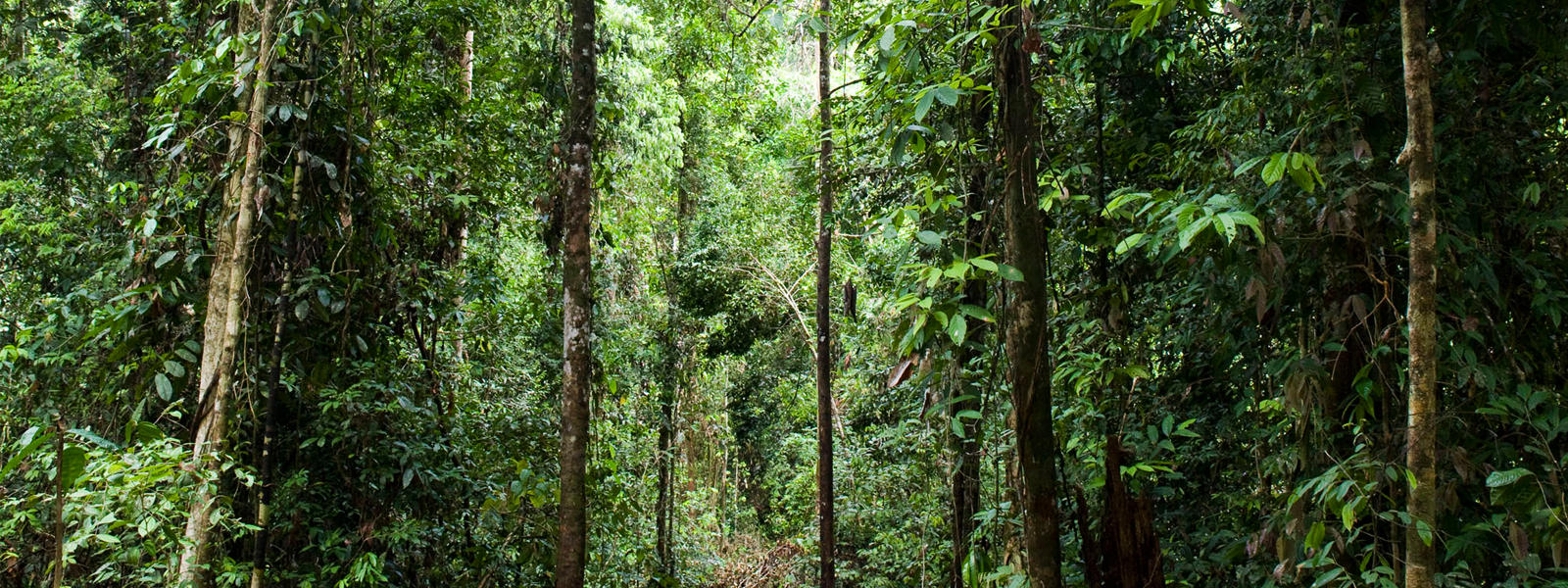
Forest, East Kalimantan, Borneo

Sample 1

Wake Forest Continues Sustainability Efforts as a Member of We Are Still In

As a signatory of We Are Still In, a climate coalition of American businesses, states, cities, and universities dedicated to working toward the goals of the 2015 Paris Climate Agreement, Wake Forest University is continuing its efforts to reduce its carbon emissions. Good summary lead

“In signing it, we’re saying we want to be responsible actors to preserve our planet,” said President Nathan O. Hatch in an interview. “What does that mean? We have to continue to work to that end.”

In 2015, 195 nations signed the Paris Climate Accords to take a collective step to stop the Earth’s temperature from rising above 1.5 ℃ by 2100, although it has already increased by 1 ℃ since 1900. A failure to stop rising temperatures would result in even more extreme weather events and more rising sea levels.

In the Paris  agreement, the United States pledged to cut its carbon emissions by 26 to 28% of the 2005 levels by 2025 and committed to providing $3 billion in aid to poorer nations by 2020. On June 1, 2017, President Donald Trump announced that he intended to pull the United States out of the Paris agreement. Various subnational groups, including We Are Still In, formed in reaction to Trump’s move.

“Together, we will remain actively engaged with the international community as part of the global effort to hold warming to well below 2℃  and to accelerate the transition to a clean energy economy that will benefit our security, prosperity, and health,” reads the declaration of the We Are Still In coalition, the members of which represents $6.2 trillion, or roughly half of the United States economy.

“President Hatch publicly affirmed our commitment to addressing the very real threats posed by our changing climate with his signature on the list,” said Katie Neal, University spokesperson, in an email.

The university’s signature in We Are Still In means that Wake Forest will continue its sustainability efforts, said Dedee DeLongpré Johnston, the director of the Office of Sustainability .

“There are three things,” said President Hatch. “It’s the continuing to help to make our (carbon) footprint institutionally sustainable, continuing to help all of us live a lifestyle that is sustainable, and then having academic programs so that more of our students leave the university with sound knowledge of what’s happening in the world.” Another good answer. You must’ve asked good questions.

Wake Forest has been working to improve the carbon footprint of its campus for years.

“Facilities organizations have always been change agents in that,” said John Shennette, the vice president of Facilities and Campus Services. “We have to be.”

“A lot of what’s driving the change on campus is efficiency and saving costs,” said Justin Catanoso, a journalism professor at Wake who is a regular contributor at mongabay.com, an environmental news organization. “It accrues to a smaller carbon footprint, which helps in climate mitigation – that’s the end game.”

One aspect of the effort to reduce the carbon footprint of campus is improving the efficiency of the infrastructure and buildings on campus. In doing so, the amount of electricity that is used is reduced. According to an Environmental Protection Agency report from 2016, electricity generation accounts for the largest share of greenhouse gases at 31% of greenhouse gas emissions since 1990.

The installation of LED lighting is an improvement being made in the interiors and exteriors of buildings across campus.

“A typical interior lighting conversion saves about $35 a year in energy use,” said Doug Ecklund, the Building Systems manager. “By the end of this summer I will have been involved in about 3,500 LED conversions.”

Additionally, the renovations of the dorms Poteat, Huffman, Kitchin and Davis included efficiency and sustainability improvements. Taylor and Efird are slated to be renovated following graduation this year.

Occupancy sensors allow lights and temperatures to be changed when people are not in the room and have resulted in a 20% decrease in electricity usage. The ability for Facilities and Campus Management to adjust room temperatures remotely during breaks has also been installed.

The people within these buildings also play an integral role continuing Wake Forest’s sustainability efforts along the lines of its commitment to We Are Still In.

President Hatch recalled with a chuckle when Dedee DeLongpré Johnston, the director of the Office of Sustainability, personally gave him a reusable water bottle.

“That’s when you can actually effect change, when you put that many people together,” said Catanoso. “We’re not going to get to the goals of the Paris Agreement without the United States doing everything it can.”

REPORTING INDEX

SAMPLE 2

“Sawstainability” in Action in the Forest

Wake Forest, by the very nature of its name, has a certain arboreal identity. Trees are becoming more of a revered commodity, so finding innovative ways to maximize the value of tree-based products on campus is increasingly important.

“That tree that came down, it’s going to stand a long time, just in a different form,” said Frank Shelton, director of Housing.

A joint effort between the Office of Residence Life & Housing and Facilities & Campus Services to repurpose and reuse old furniture and reclaimed wood on campus, cleverly nicknamed the “Sawstainability” initiative, has been a point of pride for both departments.

Since 2012, around 2,100 wooden bed frames have been removed and replaced in residence halls across campus. Of  those, nearly 40 percent have been kept and repurposed (as what?), while the remaining 60 percent have gone to foundations like Goodwill and Habitat for Humanity.

“We have yet to put the first piece of wood [from old furniture] into a landfill,” said Shelton.

Landfills have typically been a common grave for wood materials of all kind. The Environmental Protection Agency estimates that landfills received around 11.1 million tons of wood in 2015, which was about 8 percent of all material solid waste sent to landfills that year. 

Manufacturers, consumers, companies, and schools across the country are committing to “upcycling” efforts to keep reusable materials out of landfills. Designer William McDonough played an integral role in popularizing the idea of upcycling with his 2002 book “Cradle to Cradle.” Upcycling involves the process of recycling and reusing components of a product for another purpose in order to reduce waste.

Saving the old wood from rotting away in landfills is not just a sustainability play. By donating much of the wood that the construction team cannot repurpose, the school saves a sizeable chunk of change in transportation costs and assorted dumping fees.

“It costs about $37 per ton to dump anything in a landfill,” said Shelton, “and it’s even more to move it out of a building, put it in a truck, and haul it away to dispose of it. Through partnerships with some local non-profits, we let them take it away so the school doesn’t have to pay for anything.”

A case study conducted by the two departments determined that the upcycling efforts have saved about $145,000 for the university since 2012.

So what becomes of the furniture that can be repurposed? J.L. Bolt, the university’s general construction superintendent, is the mastermind behind transforming old bed frames into something entirely new.

“He’s sort of a wood guru,” said Zach Blackmon, assistant director of Operations in Residence Life & Housing. “He and his team take all the materials and turn them into some really cool things.”

The “Sawstainability” plan derived from a need to get rid of piles upon piles of old bed frames stacked idly in a warehouse, as well as to find a use for numerous trees that were removed from campus when construction began on Dogwood and Magnolia residence halls in 2012.

Fortunately, a lot of students were falling out of their beds.

“We had a lot of requests for guardrails for lofted beds, but they cost $75 a piece,” said Shelton. “We had the carpenters take some of the old wood and have a go at it, and they ended up making them for about $12.”

Encouraged by the sustainable and fiscal benefits that the guardrails yielded, they began making wooden frames for white boards, mirrors, cork boards, and sandwich boards for event listings in residence halls and classrooms across campus. Bolt and his team finished these jobs then began crafting benches, chairs, desks, and tables that can be found scattered across campus.

“You can always tell by that lighter color you see in some outdoor wooden furniture,” said Blackmon. “That’s the handiwork of J.L Bolt.”

Shelton is quick to point out that his office isn’t a one-trick pony when it comes to sustainability efforts. Beyond repurposing old furniture, his office has overseen a number of sustainability-driven changes to residence halls both old and new. Among these initiatives are upgrading lighting systems to motion-sensing LED lighting and replacing wasteful C-fold paper towels with rolled paper towel dispensers.

Wake Forest students appear to be generally aware of these more high-profile improvements, but many don’t consider the source of the wood they sit on, let alone the significance of its journey to its current form.

“I guess it’s neat that they give things a second life,” said junior Monnica Rodriguez, as she relaxed on an upcycled-material bench near Scales Fine Arts Center, “but how much of a difference does it really make?”

“Part of our mission is not only to provide housing, but to educate,” said Wesley Todd, assistant director of Housing, “and we do that through ways that aren’t always intentional or obvious, but they’re there.”

Since 2012, Wake Forest has purchased about 1 million pounds of wood. Shelton recognizes that figure is imposing, but reaffirms his commitment to squeezing every ounce of value out of the lumber on campus.

“We have all this wood,” he said. “What else are we going to do with it?”

Reporting Index

Story #3 Idea Henry Parkhurst

I’m planning on writing about the presence of climate change deniers and how that ideology has been developed. I grew up in an area where it was difficult to witness the amount of people who depend on the land for their livelihoods but refuse to acknowledge that policy change and effort is required to protect their way of life. To accomplish this, I plan to meet with Dr. Bardon, who teaches a class on the psychology of denial, and interview various members of the Wake Forest community to explore their personal relationship to the severity of climate change. The reason I want to study politics and journalism is that I am very interested in what motivates people to vote the way they do, and I believe exploring this topic will provide both personal and collective insight with regards to that question.

Raj Story #3 Idea

For my third story, I plan to discuss the role of technology in combating climate change and econ-friendly uses of technology, whether that be LED lighting, nanotechnology, or more controversial technology that is aimed at reversing climate change such as climate capture technology. I plan to speak with David Carroll, who is an expert in nanotechnology, about this and more.

McNulty Story #3

For my third story, I want to write about the pit just recently shifted to putting roughly 1/3rd mushroom in all of their burgers. This is known as the blended burger and it leads to more sustainable eating along with less of a environmental impact. In a much broader scope than Wake Forest, Americans eat about 10 million burgers per year and replacing the burgers with 30% beef would be an excellent sustainability option. I was shocked to find this out about the burgers at Wake because I usually despise mushrooms, but it did not change my eating behavior with that popular food in dining halls on campus. I want to reach out to Dedee Johnston and she if she has any recommendations on who I can talk too / who came up with this idea.  I also think there would be great reactions in talking to students about this as I am not sure how many actually know about the blended burger. There is a lot of interesting information on the topic in terms of the burger having a lighter footprint.

Mackey Story Idea #3

I’d like to write about the heating and cooling systems in place and how they are distributed on campus. I would like to discuss on how the use of chilled water and the heating plant play a role in the University’s energy consumption and efficiency. I think it would be interesting to find out how the systems compare to Winston-Salem as a whole.

For sources, Deedee Johnston suggested that I speak with Jimmy Nifong who teaches at the Tunnel Tours. I plan to interview a few students and someone from the Office of Sustainability to see what their understanding of these systems and energy consumption is. I also want to visit the heating plant if possible.