
In class Wednesday, we will discuss in detail an in-depth environmental series I proposed last April that was published in the News & Observer in Raleigh in early January in a 3-part series. As I will explain, the company at the center of the series, came after Saul and me when our reporting started in May. But the industry, and the company, got more focused after the series published.
There’s a lot here, but not overly so. First, please get a good sense of what Part 1 (by Saul Elbein) and Part 2 (by me) are about. The stories are written for a general audience with no previous knowledge of the issues. After that, please read the industry-sponsored reaction to the series and how they describe Saul and me (this is a sampling, not all of it.)
Assignment for class: I don’t want an essay this time. Instead, in bullet points, list 8-10 items (or so) from the our two stories that were surprising to you, concerning, or confusing. Given what we’ve discussed about what distinguishes real news from misinformation, do you believe the stories are fair? If you see what you think is bias in either story, please include that among your observations. Lastly, summarize your reaction to the three online stories that industry advocates posted about me (before the series ran) and Saul and me, afterwards. What impact did the criticism have on your view of the two stories. What questions did they raise?
Wood pellet stories:
Part 1 — Slow Burn: Europe uses tons of NC trees as fuel. Will this solve climate change?
Part 2 — Slow Burn: From Poland to NC, activists plea for reduced carbon dioxide
Industry response:
Mongabay’s Anti-Bioenergy Advocate: Justin Catanoso
Meet The Activists Masquerading As Reporters Attacking Bioenergy
Failing a Basic Test of Integrity in Journalism
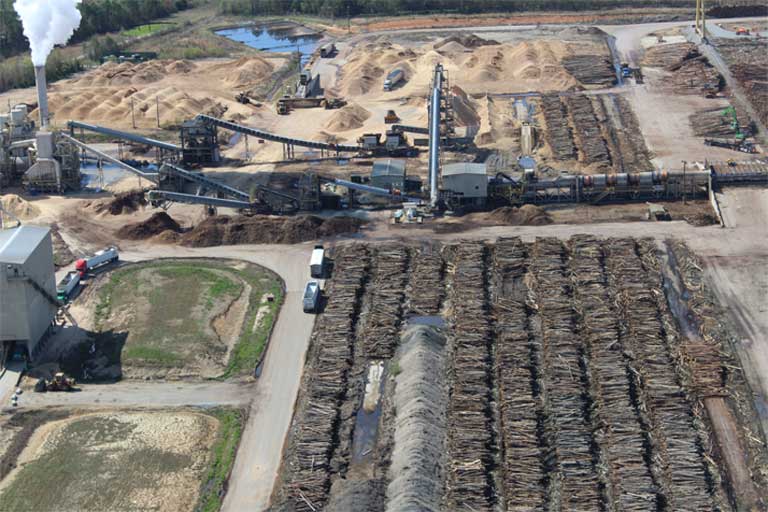
Thousands of North Carolina trees stacked like cordwood wait to be turned into wood pellets for overseas shipment, mostly to the UK and EU, at one of three pellet-making plants in North Carolina. Photo courtesy of the Dogwood Alliance.