Author Archives: Justin Catanoso

Short essay for Week 2

Demand for local news remains strong, but one in five newspapers in the United States has closed since 2004.

Social media — especially Facebook, Google and Twitter — have siphoned off billions in ad revenue from one of their primary sources of content: local news organizations. The result has been disastrous for newsrooms large and small across the U.S.

Please read this recent story in The New York Times about a Congressional response to this challenge to local news organizations.  In typed essay of 500 words or less, due in class Tuesday, please identify the issues the story illuminates. What are the concerns? What has been the impact on communities as local news has withered? Why, in this time of deep political polarization, is there some bipartisan support to address the problem?

Finally, reflect on how local news is covered in your own community. Are you aware of the health of your local news media; do you read and watch it when home (or from afar); do you or your family depend on it? Please tell me what you think here, not what you think I want to hear. (Local news, important as it is, can often be its own worst enemy in its appeal to news consumers).

Please print your essay and bring to class (there are too many of you for me to print your essays).

Homework for Week 2

Image result for the new york times

1. Please read Chapter 3 and complete the three online quizzes as I demonstrated in class Wednesday. The quizzes can be taken as many times as you need to get the answers correct. That said, I only check to see that you’ve completed the quizzes and do not count the grades. They are helpful in driving your reading and skills comprehension week by week.

2.  Be sure you have a semester long subscription to the New York Times. CLICK HERE.

3. The third impeachment trial in the nation’s history is underway. Please pay attention. I recommend you sign up for the Times Daily briefing, which like The Skimm, offered a concise highlight of the day’s news with links to full stories.

4. Please read the news with Chapter 3 in mind — context and structure (lead, support for the lead, use and punctuation of quotes, attribution of sources, tone of the writing).

5. Look at bylines and consider your interests. In two weeks, you will tell me which Times reporter you want to follow this semester. It can be from general news, politics, international, features, sports, fashion, etc. It must be someone who writes at least a few times a week, and cannot be an opinion columnist.

Athlete Profile story guidelines

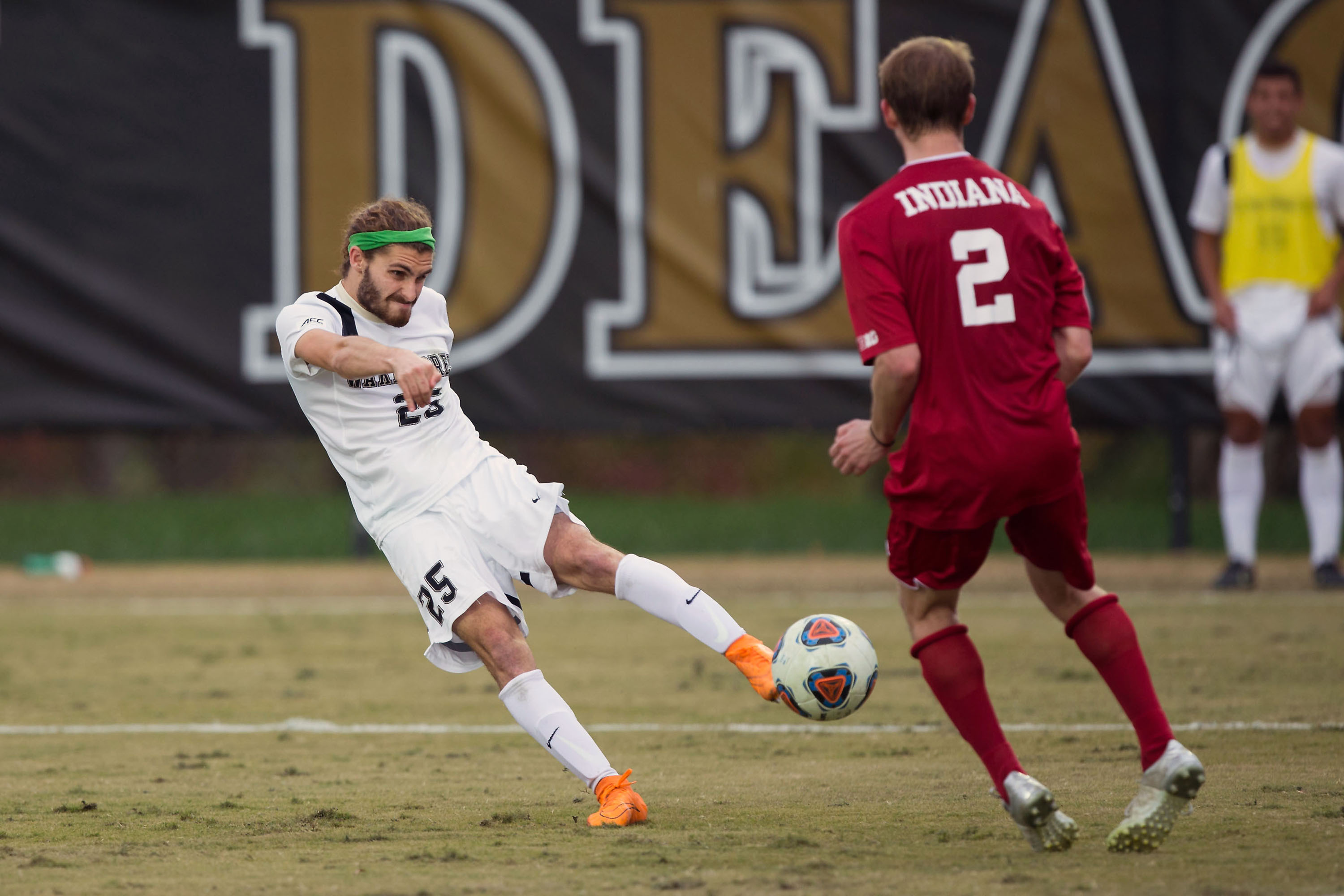
Image result for wake forest men's soccer

Athlete Profile

This is a story you started early in the semester when you selected your athlete to profile. You have completed two blog posts from interviews with sources on the periphery of your athlete and the athlete himself or herself. Moreover, we have read numerous powerfully and creatively reported and written profiles from BASW that provides a kind of template for what good profile writing can achieve with the right information and execution.

In this final story of a very fun and productive semester, where the quality of writing of each one of you has improved week by week, I am asking you to go a step beyond — to push yourself and your storytelling skills to capture an angle or aspect of your athlete that not only captures who they are and what drives them, but captivates the reader along the way.

That’s your assignment in brief.

How you do that is entirely up to you. Here are some recommendations and guidelines:

  1. Identify the tension — positive or negative — on which your profile hinges and keep in mind the details you need to build that tension, reveal it and ultimately resolve it (think Daryl Dawkins under the rim wondering if he can still dunk at the outset, how that story ended, and what came in between).
  2. identify the focus of your story, or the primary theme. Stay focused there and take your story deeper. Avoid simply skimming the surface and moving from topic to topic. You can do this easily if you’ve done enough interviews, asked enough questions, done enough research. If you haven’t, this assignment will be harder to pull off at the level I’m asking.
  3. Show, don’t simply tell. Use descriptive passages, anecdotes and observations to build your story.
  4. Tell your story in sections with subheads throughout. Your story should have three or four sections, which means you will write a headline and three subheads if you have four sections.
  5. Be selective in your use of quotes. Make sure they do not reiterate what you’ve already written, but rather push your story forward and reveal something about the person speaking.
  6. Be creative. Take risks. Surprise or delight. Write like you love it. Because in many ways, you’ve each experienced the kind of storytelling with blog posts and assignments this semester.
  7. Include at two of three photos of your athlete with your story.
  8. Story length: 1500 words. That’s your max. That gives you plenty of room to roam without rambling. That means three sections of 500 words, or four sections of just under 400 words, if evenly split. Be mindful of how those sections fit together to tell your story and bring your athlete fully to life.
  9. Deadline: Friday, Dec. 13 by midnight. Be sure to send to me by email, and post to your blog with the photos.

Guidelines for Story 5 — final story from your beat

Image result for chasing the big journalism story

Assignment 5 

In-depth story on your beat

Length: 1,000-word minimum; 1,200 word maximum (put word count at end of story — if you believe you story needs to be up to 1,500 words, please make your case in an email)

Deadline: TBA — but during Finals Week

Grading: You will receive separate grades for reporting and writing.

          Be sure to double space your story and use paragraph indentations.

Focus: As we’ve discussed, this final story should be an issue on your beat with enough substance to delve into at some depth. Once again, build this story around a central theme to help you keep your story focused. Ideally, there should be some conflict, or at least, something at stake in this story, some that makes it intrinsically compelling and worth digging into. Keep your eyes open for telling details; keep your ears open for illuminating quotes.

Overall goal: This story should be interesting enough and timely enough so that the OGB will consider publishing it in January or February.

Lead: You have choices. Use the one that works best for the tone you’re trying to set: hard news, anecdotal, a summary of elements. Don’t delay, though, in telling the reader why he or she should care about this story. Once again, be sure to include a “nut graf” high in the story that tells the reader essentially what the story is about, and if possible, what’s at stake. Put you nut graf in bold — so that you know your have one, and I can see what you think it is. 

Sources: You must quote at least four people in this story, either directly or through paraphrasing. One of these people will be your subject. Your must also cite several outside sources of information from research. Make sure you make good use of these quotes. Quotes should illuminate your reporting and push the story forward, not simply echo the observation in the preceding paragraph.

Photo(s): Include at one or two photos that help illustrate your story. Embed in your Word doc or send as separate attachments if too large.

Creative: If you have a unique or creative way you want to tell this story, give it a try. Now is the time to experiment and push the boundaries of your writing abilities and style. You won’t be penalized for taking risks that don’t completely hang together. You will be penalized if your story is listless, void of details and lacking illuminating quotes.

Descriptive: You are encouraged to write not only what you’ve heard and read, but what you can see and perhaps even feel. Passages in your story should be descriptive and vivid.

Reporting index: Because you will get a full grade for your reporting on this story, at the end of your story, briefly describe your reporting efforts. Tell first how you got this story; this is critical to letting me know how your beat development has played a role in this story. List all people you’ve interviewed for the story, even if they are not quoted (though you still must quote at least four in your story). List any and all research or outside information that you used in the reporting process. For example:

  1. Interviewed Bob Smith, title, Nov. 5, 2019.
  2. Telephone interview with Bob Smith, title, date.
  3. OGB, headline, date
  4. Web story, URL, date.

Guidelines for Story 4 and Story 5

Image result for the Q&A

The Q&A profile:

  1. Alternative form of storytelling.
  2. Readers like them. These are written in chunks, but are connected and revealing.
  3. Give a sense of hearing the subject talk. You want both the question and answer to sound conversational — not like you’re reading from a list of question and not listening.
  4. Create a story with a beginning, middle and end. As such, be mindful of your first question and how you follow up. Your last question/answer should feel like you are bringing the conversation to a close.
  5. You can edit your questions so that they are concise and clear. (This is not a transcript.)
  6. You must edit the answers so that they don’t run on too long.
  7. You can shuffle the order of the questions from when you asked them. The idea is to tell a story. You are in charge. Organization — and focus— is essential. Ask yourself: what is this Q&A about? Don’t veer off in several directions. Go deeper and deeper.
  8. The intro – No more than 100 words. This is really your nut graf. You want to introduce not only your subject, but the focus or theme of the story — the news hook. This is not a biography. It is a snapshot. Keep the intro tight and focused.
  9. Parameters: 900 words, maximum — including your 100-word intro. You need between 8 and 12 questions. Keep answers concise and on point. No wordy questions or answers.
  10. REQUIRED: Include a photograph or two embedded in the Word doc.
  11. Deadline: Friday , Nov. 22 — midnight.

Image result for photo story

The photo story

Your assignment is to come up with the story you can tell visually, with the help of cutlines (or captions). Be creative. Your choices are limited only to your imagination. In this assignment, the news hook is less important. Follow these directions below, review photo essays readily available at nytimes.com or elsewhere online, and you’ll do fine. I will try to find some from previous classes as well.

  1. Minimum of 12 photos. Maximum of 15.
  2. Taken as a whole, the photos should tell a story that suggests a beginning, middle and end.
  3. Be sure to include three different kinds of shots: wide shot, medium range, close-up/detail. When you order your shots, make sure to vary these focal lengths to avoid too much visual repetition. Choose your opening and closing photos carefully, like leads and endings.
  4. First photo should include a short paragraph, like a nut graf, that sets up the narrative (100-125 words max). Each photo after should carry a one-sentence cutline that briefly describes the photo and/or further explains the story. Include names if you are photographing people.
  5. Organize your photo story in Spark. This is a great, easy-to-use format for organizing your photo story. Use it creatively.
  6. Deadline: Wednesday, Dec. 4. We will review all of them together in the last class. You will post the link to your photo story on the class blog, and also send me the link in an email. I will evaluate your final assignment in a return email.


Final story: End of week update — required for all

Image result for tripp mickle

Tripp Mickle, WFU ’03, beat reporter, The Wall Street Journal

Please respond by email before 5 pm Friday with an update on your final story. A paragraph or two is all I need; what’s important is that you make progress this week. It’s also really important to have most of your reporting completed before you leave for the holiday break.

Story length: 1000-1200 words, unless you can make a case for up to 1500 words. Here’s what I am looking for:

1. Benny — Story summary and reporting needed.

2. Meredith — Reporting progress with both official sources and students. Research progress on the larger social and cultural context for zero tolerance movements.

3. Isabella — Interviews remaining for endowment story, research progress on the larger context of endowments representing university ideals, not simply growth goals.

4. Kate — Progress on interviews remaining on your eationg disorder story.

5. Jonathan — Decision on the three theme houses in which you will focus, and interviews completed this week, and those planned for next week.

6. Hunt — Summary of story idea on Rx drug abuse and sales on campus, interviews completed by Friday with Student Health and plans for interviews next week.

7. Lexi — Progress on interviews with officials and students regarding the unfulfilled mandate to incorporate entrepreneurial ideals, thinking and principles in the liberal arts. Progress on research in understanding what those principles are, and the larger context of what’s at stake for students and the university.

8. Quinn — Interview progress on APO as a social organization, not simply an academic one, and whether it’s possible to be both.

I will send a story by Tripp Mickle in preparation for next week’s class; I’ll get it to you soon. I will expect each of you to read it and have questions for Tripp about his career path,

Multimedia Project for Nov. 13 – Simulating a newsroom

Image result for reporters at work

The roles:

Editor: remains in class, researches links, edits and posts the story to the blog, writes the headline, inserts links; Reporter: interviews two or three sources, takes notes, writes 250-word story on deadline; Photographer, takes photos of sources being interviewed and possibly related photos on campus, puts together a 3-5 photo slideshow to be inserted by link into the story; Videographer: films short clips from the interviews, uploads one of 20-second or so to YouTube, so it can be inserted in the story. Or another format that can be inserted as a link.

Tools: Laptops for everyone. Smart phones. Pen and notepads.

Deadline: 10:30 a.m. No exceptions.

Question prompts (these need to be timely and topical enough so that there are related links on other news web sites. You can alter these questions as you see fit and be prepared to ask a few followup questions. You can also come up with an entirely different question — but let me know!):

  1. It’s registration week and many students are frustrated by classes they want but can’t get into. Given the tuition, shouldn’t it be easier for Wake students to get the classes they want, when they want them?
  2. The Office of Sustainability and Food Services has spent two years improving the variety, taste and quality of food in The Pit. Have you noticed? What’s your reaction to the new Plant-Forward Dining emphasis?
  3. Students loans are piling up for many students on campus given the cost of going here. Should the federal government become more proactive with loan forgiveness?
  4. The House of Representatives will start public hearing on Articles of Impeachment of President Trump. Are you discussing this with your family, and if so, how are those discussions going?
  5. What are the issues most important to you in the 2020 campaign for the presidency; do you have a candidate or candidates that you believe represent your priorities?

The teams:

The Gazette

Layla, Tut, Connor, Maggie

The Post

Saylor, Ruby, Nicole, Braxton

The Journal

Lizzie, Henry, Nikhil, Ellie, Cydney

(this team will have two photographers or videographers)


Sample Q&A profiles/stories

Sample 1

Adjusting to Campus Life After Spending First Year Abroad

The college transition is both highly anticipated and feared by freshmen. However, their hopes and fears are soon eased as they meet other freshmen in the same position.

Sophomore Anna Jones is experiencing this rollercoaster of emotions all over again. Participating in the Global AWAKEnings program, Jones spent her freshman year studying abroad in Copenhagen, Denmark.

Acting as a guinea pig for this new program and having never traveled to Europe, Jones did not know what to expect, but was excited for the adventure.

Living on campus the first time this year, she is gradually finding her niche at college. Good opening

 To begin, how did you become interested in spending your first year abroad?

Oh, man! That’s so hard. I like to say I’m adventurous. I like trying new things. I’m outgoing, but only once you first get to know me. It takes me awhile to warm up to people. This is a good answer, but it doesn’t exactly answer your question.

Most people here visit the school and fall in love with it. But, not many people decide to spend a whole year away from the school they love. What inspired you to go abroad? Good; you are revising your first question and giving her another chance to answer

My dad went to Wake and actually works here now, and my two oldest brothers went to Wake. I always said I wasn’t going to go here because I wanted to go away for school, but then I took an official tour and was like, “I love it so much that I have to go here.” So, this program was the perfect chance for me to be adventurous and have a unique first-year experience and still come home and be at Wake. Now she’s answered your first question, too.

Can you describe the group’s dynamic abroad? good

We started with 18 students, but one didn’t come back second semester and then another transferred after the program. We’re like a family, but if you take any group of teenagers and put them together for a year, it can get pretty tense.

How so? good

We would wake up in the same apartment, commute to class together, be in class together and travel together, so it was a lot of time spent together. I don’t even think I could be with my family for that long (laughs). nice

I heard you are on the pre-med track. How did the courses offered fulfill your requirements?

Most classes were divisionals, but I actually got very little divisional credit. Since a Danish professor taught our art class we didn’t get divisional credit even though we had a study tour to Venice, and I got to see the actual paintings we studied. But, that made the class worth it. It was literally History of Western Art, which you can take at Wake, but if I want the credit I have to take it again. Ok,, that’s crazy. They volunteered to take this first year abroad [driven in part by a lack of housing on campus] and they don’t get WF credit for all the courses they take there?

 Did you ever get homesick? Good question

It came in waves. When I came back second semester, I missed my family a lot more because the adrenaline from first semester wasn’t there. Also, second semester the sun would rise at 10 a.m. and set at 3 p.m., which didn’t help. But, by the end of second semester, I didn’t want to leave again. Interesting.

Did you ever second-guess your decision? good

Personally, a lot of second-guessing happened this semester because we really are like freshmen. We’re thrown on halls with upperclassmen, and it’s hard as sophomores to make friends. But, it’s getting easier.

What was your favorite memory of the year?

Oh, man (laughs). I don’t know why, but this one always stands out. A few of us went to Edinburgh, Scotland, and we went pub-hopping. We went into this one pub where a bunch of locals were having a trivia night. They let us join in, so we played trivia in this bar with a bunch of locals. I think about it all the time.

 How has your experience shaped you as a person?

I seek out diversity more than I did before. My friends from high school and I were all similar, which was awesome, but I now want to meet people different from me who have different life stories. Great answer

What has it been like adjusting to Wake this year?

In my head I was like, “Oh, I’m going to get back and all of a sudden I’m going to have a great group of friends.” But, I have to go through the period of that awkward freshman year again where I’m trying to find people who I get along with. I feel like a first semester freshman, honestly. Interesting and insightful.

How do you think your life would be different if you did not pursue this program?

I think I’d be a lot more comfortable here. If I’m walking by myself I have this weird habit where I have to call someone and talk to them to distract myself. So I don’t have to make eye contact with people. I still feel like a stranger on campus. But, I still wouldn’t trade this experience abroad for the world. What a curious impact…

Thinking back, what is one word you would use to describe your overall experience?

I don’t have one word, but I have a phrase: Once in a lifetime. There is never going to be another time in my life when I get to be in Europe for a year as a teenager (her future profession may require that…). First of all, I will never have the money to do that again (laughs). Second of all, there’s never going to be a period in my life when I’m just traveling. For me, that’s the kicker. I doubt this is the answer you were looking for.

Making predictions about the future at age 19 is dicey. But it’s the answer she offered. So, your choice, if you recognize the weakness in the answer, is to 1) leave it, as you did, 2) end with the question above, which would work pretty well, or 3) like you did at the outset, rephrase your question for perhaps an answer that better captures the experience of starting college a long way from campus.

Reporting Index:

Anna Jones, sophomore, Mocksville, N.C.

Rachel Cooper, sophomore, Atlanta, Ga.

Caroline Bryant, sophomore, Washington, DC

Sample 2

Inspiration Comes in Many Shapes and Sizes

 Laya Mohan has done substantially more work than most to get where she is today: A Wake Forest graduate student pursuing her master’s degree in Health Communication.

This is because Mohan was born with only one full arm, the other being nonexistent from the elbow down. This birth defect, known as Amelia, is marked by the absence of one or more limbs or arms.

Although one may not be able to imagine not being able to fully utilize an arm, Mohan has dealt with this and continues to deal with this each day, inspiring  those around her. – good, clear opening

 What was it like as a kid to have a physical disability? Good place to start

 Because of the confidence my parents taught me, I was able to go to school and do everything normal kids would. All kids are curious. When you are in first grade, you just want an answer, and I didn’t mind giving them an answer.

Was there anything you felt you could not do that kids normally take part in? good folo

 I did everything I wanted to: ballet, jazz, tap. I also played soccer for some time. I didn’t feel like there was a limitation because I would try it and if I couldn’t do it, then I just couldn’t do it.

 Can you explain how you have adapted to life? You paint your nails, cook, and perform several other tasks better with one arm than people can with two? How? Nice context and implicit message that you notice those things.

 I just find my own way to do things. It’s just a little bit of adaptation. I do my nails all the time. Maybe I can’t stand up and paint my nails, but I can be sitting down and doing it. Cooking sometimes takes me a little longer to do, but that’s okay because what matters is that the dish tastes good. It’s about figuring out the best way for me to do something. I just go into it and figure it out. If it doesn’t work for me, it doesn’t work. If it does, great. It doesn’t get me down. As long as I tried, I feel better about it. You asked a specific question, and she offered a general answer. Ideally, you follow with – can you give me an example in regards to cooking? And go with the more detailed response

 Were you nervous when you came to Wake Forest as a freshman?

 No. At Wake, I know everyone here is really educated, so they probably have either met someone or know of these things beforehand. Some people like to ask me straight up, which is fine. It’s up to you. If you want to know, you can ask. If you don’t want to know, don’t ask. I don’t know what other people are thinking. Most of the time, what I’ve heard people say is, “I don’t even notice at first.” interesting

 What is the biggest obstacle you have overcome?

 The prejudices people have against you without knowing who you are. But people who have those prejudices against you don’t matter because they aren’t taking the time to get to know you. This reveals a good bit about her character

 I know there was a time when you felt self-conscious about putting yourself out there online. Can you tell me more about this experience?

 Yeah, sure. My friend was encouraging me to get on Hinge (a dating site) and I just had in the back of my mind: “What if they’re like ‘Oh, wait. No, because she only has one arm?”’ I don’t want to deal with that. I like meeting people in person because there’s no mystery there versus the dating profile.

 How have you been able to prevent your disability from interfering with the “smart, hilarious, and down-to-earth” person your friends admire?

 I really have to credit my parents because they never wanted me to feel different. They wanted me to try everything that I can and be the best at what I can do. Because they instilled confidence in me, it has been easier for me to try things and not let other people stop me.

 You and your friends seem to spend a lot of time together. Can you explain how they make sure you do not feel isolated?

 Yeah. We were playing video games one day and everyone kept asking, “Can you do this?” I said, “Yeah. I can. I’ll tell you if I’m struggling.” They really try to be inclusive and make sure that I can be a part of any activity. Pretty sure I got second in Mario Kart when we were playing that one time too! Laughs 

 This may be an obvious question, but do you wish you had two arms? Would it make a big difference in how you live? Wow, great question. I don’t think I would’ve thought to ask that…

 You know, there was a time in Middle School when I did, but I don’t know any other way, so I really have nothing to compare to. But in some ways, people are a lot more surprised and impressed with what I can do. If I was normal, no one would be impressed. Now, I have to work twice as hard to get to that level of perfection. Great answer

 What is your message for people who are self-conscious of their physical disabilities and how to stay strong and confident?

 Confidence is key because at the end of it, people are more curious than trying to put you down. Curiosity is not a bad thing, so you have to have the confidence to say, “Yes. This is me. This is what I have, but I can still do so much more. I’m not defined by my disability.” Great ending.

You moved outside your comfort zone with this assignment and this interview subject. In the process, you apply so much of what we’ve been talking about all semester, starting with: the quality of your questions will determine the quality of your story. Here, your questions are focused, knowledgeable and tactful. As a result, she appears to grow more and more comfortable, revealing more about herself and her disability. There is one time where more concrete details would be helpful, as I note in the text, but it doesn’t detract from the overall story you’re telling about an interesting student and how she has become the person she’s become. 

Reporting Index

Nov. 11-13 assignments

Image result for wake forest track and field

  1. Progress on your profile subject. Conduct at least one interview and some additional reporting for your athlete profile. 500-word blog post due by midnight Sunday. You can interview your athlete, someone one the edges of the story, latest stats. Weave this into a kind of story/memo that suggests emerging themes for your final story.
  2. Keep in mind, you want most of your interviewing for your profile completed by the time you leave for Thanksgiving break.
  3. Christian will lead us in the discussion of Pride of a Nation from BASW. We will discuss this story Wednesday.
  4. Dave Spadaro, spokesman of sorts for the Philadelphia Eagles is set to join us via WebEx on Monday at 11 a.m. (be on time!). This story in Philadelphia Magazine is must read to prepare you for the big personality that will fill the room. Again, I want all of you prepared to ask questions.
  5. Be prepared Monday to discuss your ideas for your multimedia team project, due the week of Nov. 18.

Story 3 guidelines

  1. Story length 700 minimum, 750 words maximum. Deadline: 10 a.m. Thursday, or earlier. Because of our Green Weeks lectures and discussions, your stories must focus on an issue related to sustainability, environmental protection, climate change.
  2. Audience: Regardless of your topic or issue, remember that you are writing for a campus audience, and that your story must be connected to campus activities, resources, sources and/or student reactions.
  3. You can start with a basic or feature lead. Support your lead. Use a good quote early that pushes your story along. Be sure to include at least one paragraph of description — observation, sound, emotion, etc.
  4. You must have a nut graf. This may come anywhere after the third or fourth graf, but not much lower. Be sure to put it in bold so that I know you know you have one. As discussed at length, your nut graf or grafs must tie into the larger mission or goals of mitigating global warming or promoting sustainability.
  5. You must have at least four sources in your story — at least three people quoted along with research, observation, etc. Ideally, you will have more.
  6. Think of your story as having a beginning, middle and end. Be creative, but do not make anything up.
  7. No first person writing. No exceptions.
  8. Try to end with a good quote. Do not end with a personal summary or opinion. Avoid advocacy.
  9. Include one photo. Place it in the Word doc or send separately.
  10. A Reporting Index, as spelled out in the syllabus, is required at the end of your story in the same file. List all the people you interviewed, all your research online or elsewhere, even if it doesn’t appear in your story. You index should have at least five bullet points. No Reporting Index, no grade.
  11. Write a headline for your story. Then save your story as Last name Story 1.docx and send to me as an email in Word. Do not miss deadline. You will lose a letter grade if you do.
  12. Reminder: Set all quotes off as separate paragraphs. Failure to punctuate quotes correctly, or place attribution accurately, will result on a one letter-grade deduction. Please consult the textbook if you need to. FOLLOW AP STYLE.